
Mobile App Development Company in Florida
A successful app starts with the right product decisions before development begins. The team needs to know who the app is for, what users need to accomplish, which features belong in the first release, and whether iOS, Android or cross-platform development is the right approach.
OzoPro helps Florida businesses turn app ideas into usable digital products through product planning, UI/UX, mobile development, backend integrations, testing, app-store launch and ongoing improvements after release.

Mobile App Development Services in Florida
OzoPro provides mobile app development services in Florida for focused first releases and more complex applications with custom workflows, integrations and user roles.
iOS App Development
For Apple-first products that need clear user flows, reliable functionality, App Store preparation and an experience designed around the iOS ecosystem.
Explore iOS App Development →Android App Development
Android apps planned around device variety, screen sizes, operating environments, backend requirements and the user journeys that matter after Google Play launch.
Explore Android App Development →Flutter App Development
Cross-platform development when one product needs to support iOS and Android and its requirements fit a shared Flutter architecture.
Explore Flutter App Development →Custom App Development
Custom workflows for accounts, booking, payments, subscriptions, dashboards, location services, notifications, user permissions and third-party integrations.
UI/UX & App Prototyping
Wireframes and interactive prototypes define navigation, important actions and product states before expensive development changes are required.
Backend, QA & Launch Support
User accounts, databases, APIs, payments, notifications and integrations are planned with the mobile interface, then tested through the critical user journeys before release.
iOS, Android or Flutter: Which Approach Fits Your Project?
The technology should follow the product requirements rather than an agency's preferred framework.
| Approach | Often a Strong Fit For | Main Consideration |
|---|---|---|
| Native iOS | Apple-first products and iOS-specific functionality | Android requires separate development |
| Native Android | Android-first products or Android-specific requirements | iOS requires separate development |
| Flutter | Products needing iOS and Android with significant shared functionality | Some platform-specific work may still be required |
The decision should consider users, features, integrations, performance expectations, budget and the product roadmap before development starts. Neither native nor cross-platform development is automatically better for every project.
Build the Right First Version Before Building Every Feature
A large feature list does not make the first release stronger. It can increase cost, extend the timeline and make it harder to learn which parts of the product users actually value.
A better first version focuses on the smallest complete product that allows the customer to perform the application's main job. An MVP should still be a properly finished product; the scope is simply controlled around the features that need validation first.
Define the core user problem before the feature list grows.
Identify the minimum complete workflow needed for launch.
Move lower-priority personalization and secondary integrations into later releases.
Build the technical foundation so version two can extend the product without starting again.
Mobile Apps for Different Business Models
App structure should follow how the business operates instead of forcing every product into an industry template.
Booking & Service Apps
Appointments, availability, customer accounts, reminders, payments, staff assignment and location logic.
Ecommerce & Ordering Apps
Product discovery, cart and checkout, order history, notifications and commerce-system integrations.
Customer Portals
Secure access to documents, account information, payments, messages, requests or service status.
Internal & Field Apps
Job assignments, inspections, photos, status updates and operational data collection for mobile teams.
Startup & MVP Products
Narrow first releases focused on validating the core user problem before expanding the roadmap.
Our Mobile App Development Process
A structured process keeps product decisions, design and development connected from the first scope discussion through post-launch improvements.
Discovery & Product Scope
Define the business objective, target users, core problem, important constraints and required integrations.
User Flows & Requirements
Map the main journeys through the application to expose missing requirements and unnecessary complexity.
Wireframes & Prototype
Plan the important screens and interactions while structural changes are still relatively easy to make.
Platform & Architecture
Choose iOS, Android, Flutter or another verified approach and define backend, database and integration needs.
UI Design
Turn the approved flows into a consistent interface that keeps the main product actions clear.
Development
Build the application in manageable stages so functionality and changing requirements can be reviewed throughout.
Testing & QA
Test critical functionality across the relevant devices, platforms, errors, loading states and connectivity conditions.
Launch
Prepare the production version for the App Store, Google Play or both according to the agreed project scope.
Post-Launch Improvement
Use analytics, store performance, bug reports and real user feedback to prioritize the next fixes and features.
Mobile App Development for Businesses Serving Florida Markets
Location matters when it changes how customers use the product. Florida should influence app functionality only when there is a real operational or customer-experience reason.
Statewide Florida Businesses
A company serving customers across the state may need one central application with the same core product experience throughout Florida.
Location-Based Services
Businesses may need maps, service areas, location selection, geographic permissions or availability based on where the customer is located.
Multi-Location Businesses
Users may need to select a branch, view location-specific services or receive information tied to the selected location.
National Brands With Florida Customers
A national company normally does not need a separate Florida version of the app. Geography can change service availability or offers without fragmenting the product.
What Does Mobile App Development Cost in Florida?
There is no single meaningful price for every app project. Cost depends on what has to be designed, developed, integrated, tested and maintained.
Number of supported platforms
Native vs cross-platform development
UI complexity and user roles
Backend systems and databases
Payments, subscriptions and notifications
Location functionality and real-time features
Third-party APIs and integrations
Security, QA and maintenance scope
Two apps with the same number of screens can require very different budgets. A scoped estimate based on the actual requirements is more useful than pricing by screen count alone.
Get a Scoped App Development Estimate
How to Choose Among Mobile App Development Companies in Florida
Businesses comparing mobile app development companies in Florida should evaluate more than design samples and the initial quote.
Ask how the team decides what belongs in the first release.
Ask why iOS, Android or Flutter is being recommended for your product.
Confirm how backend development and API integrations are handled.
Understand what testing includes and who manages app-store submission.
Define source-code ownership, repository access and third-party account access before development begins.
Ask what post-launch maintenance includes and how future releases will be handled.
Mobile App Development Case Studies
These project examples from OzoPro's existing app-development work show different product needs across healthcare, ordering and field-service workflows.
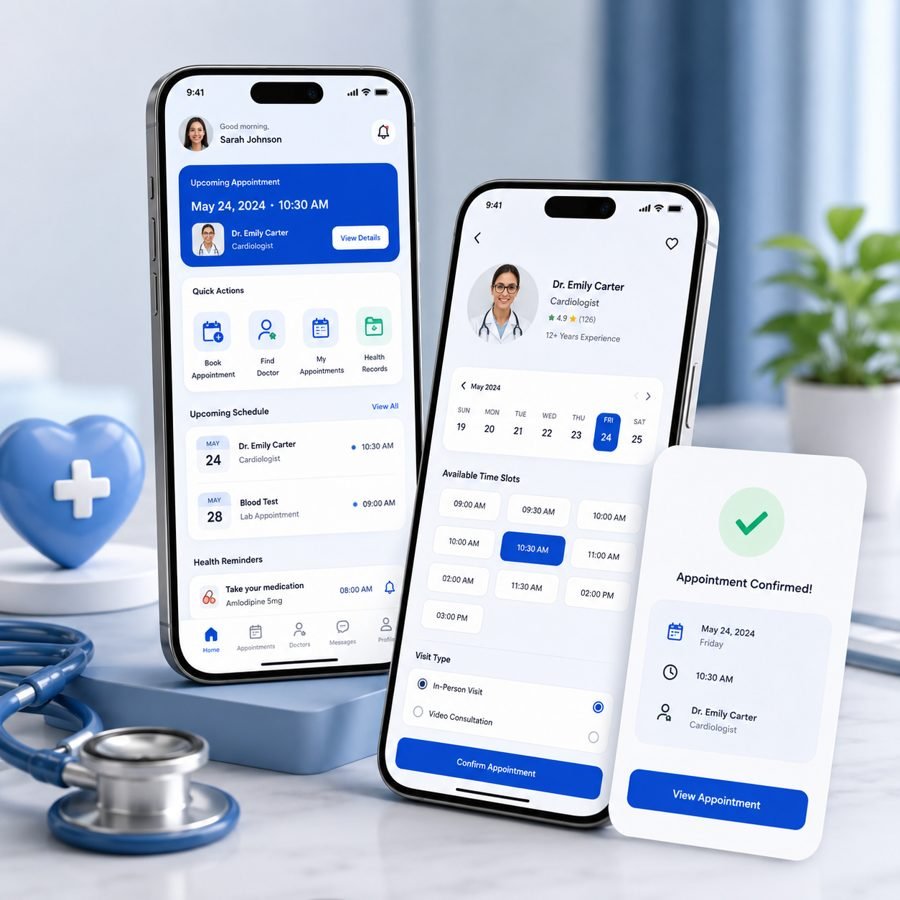
Healthcare Appointment Booking App
A patient-facing mobile experience for appointment booking, provider profiles, intake forms, reminders and secure account access.
- Appointment journey from search to confirmation
- Patient profile, reminders and intake structure
- Mobile-first screens designed for healthcare usability
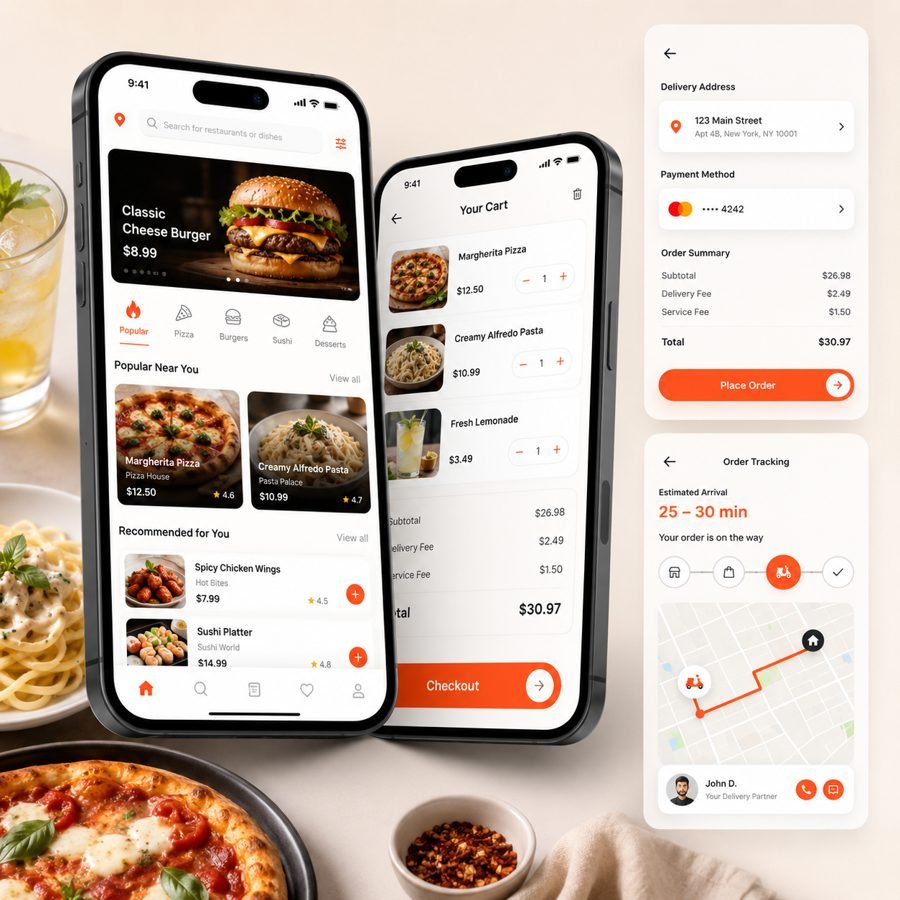
Restaurant Ordering and Delivery App
A mobile ordering experience for menu browsing, item customization, cart management, checkout, order tracking and restaurant-side workflows.
- Menu, add-ons, cart and payment-ready screens
- Order-status flow for customers and restaurant teams
- Notification structure for delivery updates
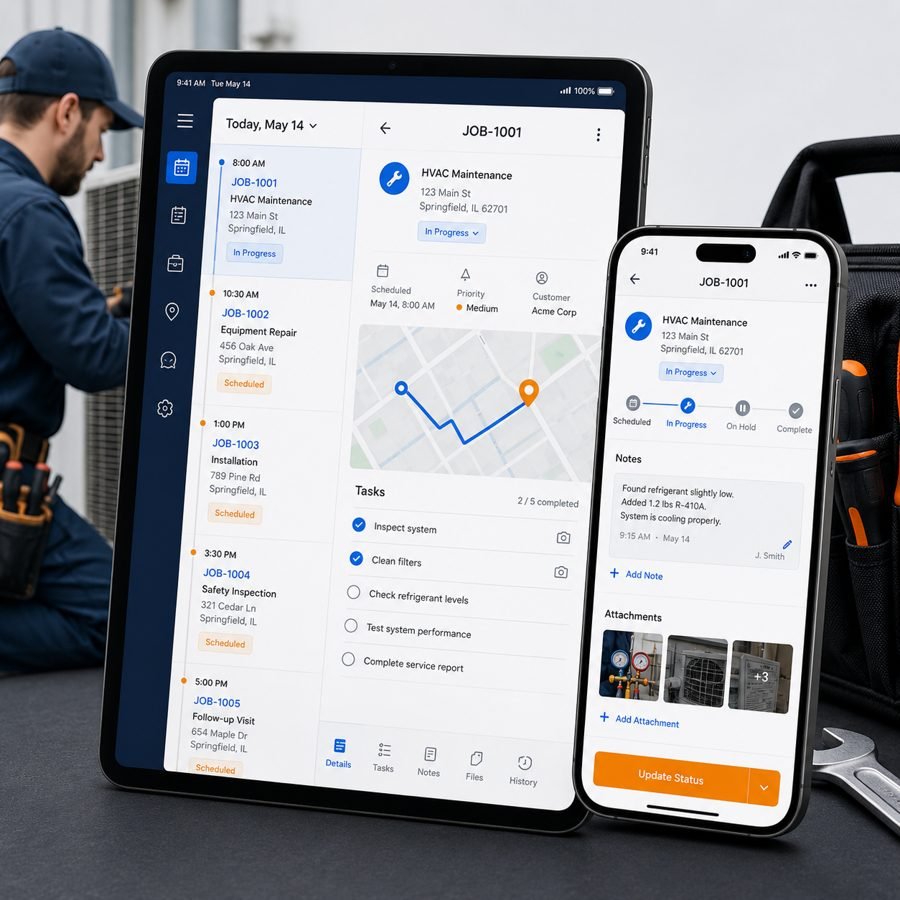
Field Service Job Management App
A practical business app for scheduling jobs, assigning technicians, tracking task status, collecting notes, uploading photos and managing field activity.
- Technician-friendly task and schedule screens
- Status updates, notes and photo-upload workflow
- Admin-ready structure for dispatch and reporting
What Clients Say About Working With OzoPro
Feedback from businesses that needed clearer app planning, better platform decisions and a development process they could understand from scope through launch.

“The discovery process saved us from building too much too early. We launched an MVP first and had a clear roadmap for version two.”

“They helped us choose Flutter instead of two native builds, which kept the project within budget and got us live on both stores.”

“The app launch plan mattered just as much as the build. We had tracking, ads, landing pages and support ready when we went live.”
Why OzoPro for Mobile App Development in Florida?
OzoPro approaches app development as a product decision before treating it as a coding project. The goal is to build the right first product and create a foundation that can improve as the business learns from real users.
Product scope and platform decisions come before development begins.
iOS, Android and Flutter are selected according to the product requirements rather than one default framework.
UI/UX, backend requirements, QA, launch and post-launch planning stay connected under one workflow.
The first release is scoped around what needs to be validated rather than the largest feature list possible.
For a broader overview of OzoPro's development offering, see our App Development Agency page.
Frequently Asked Questions
Clear answers about app-development cost, timelines, platforms, MVPs, custom functionality, ownership, launch and maintenance.
Turn Your App Idea Into a Clear Product Plan
If you have an app idea but are still deciding which platform, features or first release make sense, start with the product plan before committing to a full build. OzoPro can help define the scope and move the product through design, development, testing and launch with a clear reason behind each major decision.