
Custom Website Development Services
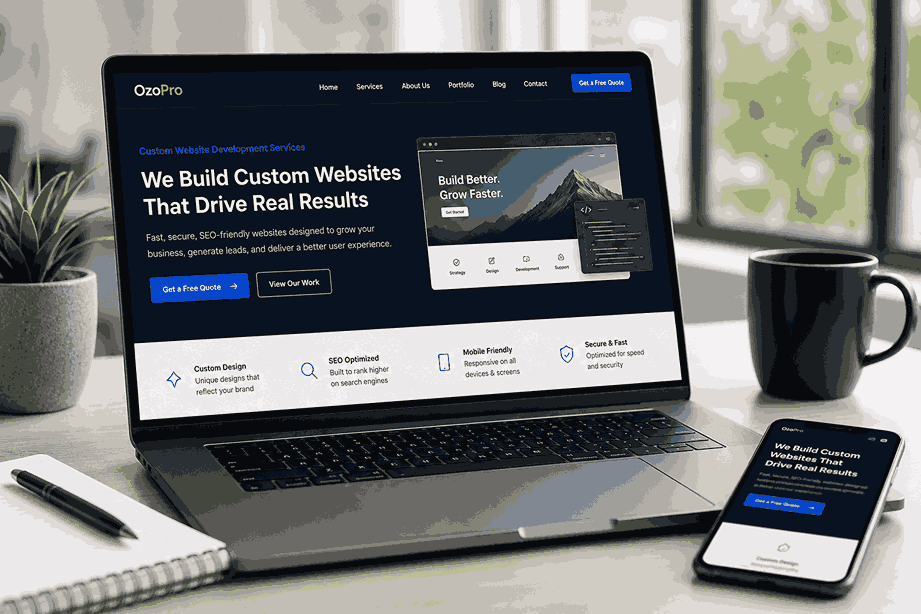
OzoPro builds custom websites for businesses across the USA that need a better fit for their customers, content and day-to-day work. We combine website planning, responsive design and development to make important information easy to find and the next step clear.
From a business website to an interactive product experience, we define what needs to be built before choosing the technology. Your project has an agreed scope, review stages and launch plan, with editing, integrations and support considered from the start.
When Does a Custom Website Make Sense?
Custom website development means shaping the design, content structure or functionality around your requirements. It can use an established CMS or a custom front end. You do not need to rebuild proven tools just to call a website custom.
Your Website Has Outgrown Its Layout
Visitors struggle to compare services, find relevant information or understand your offer. A planned redesign can clarify navigation and page content while giving your team reusable layouts.
Your Tools Need to Work Together
Inquiries, bookings or product information move between several systems. We map the workflow, review available integrations and identify the custom development needed to connect the steps.
Your Business Needs More Control
Your existing platform limits editing, functionality or future changes. We assess what is causing the limitation and whether configuration, a focused rebuild or a different platform is the sensible next step.
What Our Custom Web Development Services Include
Work with a custom website development agency that connects the visible website with the systems and publishing tasks behind it. Your proposal identifies the services and deliverables included.
Business Website Development
Service companies, B2B teams and established brands need clear information and useful contact paths. We build responsive pages around your offer, audience and the evidence customers need before making an inquiry.
Custom Front-End Development
Turn approved layouts into reusable components and responsive interfaces. We plan navigation, page states and content behavior, with React or Next.js where those technologies suit the project.
CMS and Content Workflows
Give your team a practical way to publish services, resources or project work. We define content types, reusable templates and editing permissions so updates do not require rebuilding individual pages.
API and Tool Integrations
Connect your website with booking, CRM, email or other business systems. Access permissions, data mapping, error handling and vendor limits are assessed before the integration is agreed.
Ecommerce Experiences
Develop product discovery, category navigation and buying flows around your catalog. We review platform capabilities first, with payment, shipping and order testing included where they are part of the build.
Website Redesign and Migration
Review useful content, existing URLs and search data before changing the site. Redirect planning, content transfer and pre-launch checks help reduce disruption during a rebuild.
Performance and Measurement
Review images, scripts, fonts and page loading on key templates. Agreed GA4 events and form tracking help you measure important actions, while hosting and third-party tools remain part of the performance picture.
Portals and Web Applications
For account-based tools or workflows, discovery defines user roles, screens, data and integrations. We assess feasibility and scope the required features before committing to application architecture or delivery dates.
Maintenance and White Label Support
Plan ongoing fixes, dependency updates and future features with clear responsibilities. Agencies can also scope development delivery under their own client relationship, with access and communication arrangements agreed.
Choose the Build Around the Job
A fully custom codebase is not always the best investment. We compare the editing experience, required features, integration needs and ongoing maintenance before recommending an approach.
CMS-Based Websites
A good fit when your team regularly publishes service pages, articles or project work. Custom templates can work within WordPress, with the editor and plugin dependencies agreed early. Our WordPress website design services cover this route in more detail.
Custom Front Ends
React or Next.js can suit projects with specific interface behavior or content delivery requirements. We consider rendering, integrations and deployment as part of the build, alongside who will maintain the code and publish content.
Commerce Platforms
Start with catalog, checkout and operating requirements. An existing commerce platform may cover most of the work, with custom features added where needed. For a hosted store, review our Shopify development services.
For a straightforward launch with standard pages and forms, a well-configured theme or managed platform may be enough. We identify the requirement that justifies custom work before adding development complexity.
Custom Websites for US Businesses Across Industries
OzoPro supports startups, growing businesses and established teams remotely across the USA. We adapt the page structure and functionality to how your customers make decisions, rather than putting every industry into the same layout.
Professional and B2B Services
Help buyers understand expertise, evaluate relevant work and contact the right team. Service pages, team credentials, resources and inquiry forms follow the information needed for a considered purchase.
Local Services and Trades
Make service coverage, project examples and quote requests easy to find on mobile. The structure reflects real service areas and customer questions, with clear paths to call or send an inquiry.
Healthcare and Wellness
Explain services, practitioner information and appointment options in plain language. Sensitive data collection and connected booking tools require a separate review of privacy, access and operating requirements.
Retail and Product Businesses
Organize product categories, specifications and buying information around the catalog. We assess filters, stock data, payments and integrations against the capabilities of the chosen commerce platform.
SaaS and Technology Teams
Help visitors understand the product, use cases and next step. Marketing pages, resources and demo requests can be scoped separately from the account-based application and its data requirements.
Property, Hospitality and Organizations
Present listings, services, programs or experiences in a structure visitors can explore. Galleries, inquiries and booking connections are planned around the actual business workflow.
Build a Website People Can Use and Search Engines Can Understand
Search visibility starts with accessible content and a reliable technical foundation. A new website also needs accurate information, useful pages and continued attention after launch.
Crawlable Content and Navigation
Keep important service and product information in accessible page content. We review internal links, indexability, relevant HTTP responses and rendering behavior so the front end does not hide essential information.
Metadata and Structured Data
Give important pages descriptive titles and summaries, with relevant schema that matches visible content. We check who controls canonical tags and metadata to avoid overlapping output from templates or SEO tools.
Responsive, Usable Interfaces
Readable text, labeled forms, keyboard access and visible focus states guide the build. We test important customer journeys across representative devices and discuss any formal accessibility requirements in the scope.
Realistic Performance Goals
Use Core Web Vitals and template-level tests to identify loading and interaction problems. Images, scripts, caching and hosting are reviewed together; a framework or score alone does not guarantee a fast experience.
Clear Answers for AI Search
Service explanations, project evidence and relevant FAQs make your offer easier to understand. AEO and GEO build on useful content and established SEO practices, rather than hidden text or special markup promises.
Measurement After Launch
Agree the actions that matter, such as inquiry submissions or demo requests. Ongoing SEO services can develop content and authority after the technical launch work is complete.
From Requirements to a Working Website
Each stage gives your team something concrete to review. For larger projects, we can agree a first release and scope later features separately.
Define the Requirements
We discuss customers, business goals, content, integrations and the current website. The written scope sets priorities, deliverables, assumptions and approval responsibilities.
Map Pages and Workflows
Plan navigation, page types and important actions. For interactive features, map user roles and key states so the team can review the experience before it is built.
Review the Design
Approve key layouts and responsive behavior. We resolve content hierarchy and reusable components, then record feedback and decisions before moving into implementation.
Build and Connect
Develop on a staging environment and connect the agreed systems. Regular reviews show progress against the scope while access, dependencies and changes are documented.
Test and Launch
Check forms, links, integrations, key permissions and responsive layouts. The launch plan covers relevant redirects, production access, analytics and a recovery approach for the site move.
Handover and Improve
Provide the agreed access, documentation and editing guidance. The proposal defines support responsibilities, maintenance and how further requests will be estimated.
What Affects Custom Website Development Cost?
The price depends on the work your website needs, including unique templates, content, features and integrations. We review those requirements before agreeing an estimate, milestones and the process for changes.
Hosting, premium licenses, external services and ongoing support also contribute to the total cost. These should be visible in the proposal, rather than left until launch.
Request a Project EstimateDesign and Content
The number of distinct layouts, content types and approval stages matters more than page count alone. Copywriting, photography and content migration are confirmed as separate responsibilities.
Functionality and Integrations
User accounts, booking rules, data connections and custom workflows require planning and testing. Third-party access, subscriptions and API limits can affect the estimate.
Migration and Ongoing Work
Existing URLs, hosting changes and content transfer add launch requirements. Maintenance, updates and future features need an agreed owner and budget after delivery.
Website Development Projects We Have Delivered
Our portfolio includes custom React development, Next.js websites and Framer builds. These projects show how we have used different technologies for business, healthcare and product websites, with the scope shaped around the website being delivered.

React Development
Business Website
We developed a custom React website for a business, using a component-based structure and responsive front-end implementation. The delivered work brought the website into a consistent interface across screen sizes.

Next.js Development
Healthcare Website
We developed a Next.js website for a healthcare business, with performance-focused pages and a responsive front end. The work established a scalable page structure for presenting the business online.

Framer Development
AI Product Website
We built a Framer website for a SaaS and AI business, with polished sections and responsive layouts. The work focused on the public-facing product presentation, with a consistent experience across screen sizes.
What to Send for a Useful Website Proposal
You do not need a finished technical brief to start. A clear view of the business problem helps us assess the project and identify questions that need an answer.
Your Goals and Existing Site
Share the current URL, your audience and the actions you want visitors to take. Explain what is difficult today, whether that is navigation, editing, integrations or an outdated presentation.
Features and Content
List essential pages, functions and connected tools. Tell us what content and brand assets are available, who will approve them and whether a design or development team is already involved.
Timing and Responsibilities
Include your target date, budget range and any launch dependencies. We use this context to discuss the first release, access requirements and who will maintain the website afterward.
Custom Website Development FAQs
Practical answers about cost, technology, ownership, search visibility and working with a custom web development company.
What are custom website development services?
How is custom development different from using a template?
How much does custom website development cost?
How long does a custom website project take?
Which technologies can you use for the website?
Can you build a portal or web application?
Will the website rank on Google or appear in AI answers?
Can you redesign a website while protecting its existing SEO?
Who owns the code and website accounts?
Do you provide content and maintenance?
Can you work with US businesses and agency partners remotely?
Let’s Scope Your Custom Website
Tell us what your website needs to do, where the current experience falls short and what a useful first release would include. We will help you turn those requirements into a practical project scope.